
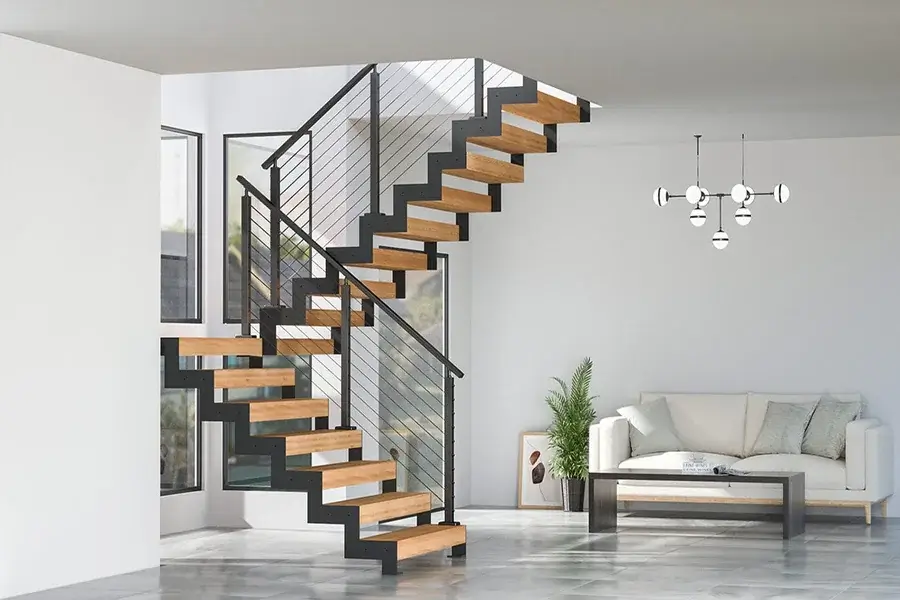
A floating staircase is a modern staircase style that looks like it’s hanging in the air. Instead of traditional risers and bulky side supports that you can clearly see, a floating staircase makes each step look “suspended.” This creates a more open, light feel, which is why floating designs are popular in modern homes. With fewer visual barriers, the staircase doesn’t block light as much, and the space can feel bigger and less crowded.
The design can be built in different ways. Some floating stairs use cantilevered treads anchored into a wall, while others rely on hidden steel structures that support the steps without showing obvious framing. No matter the method, the goal is the same: clean lines and that “steps in midair” effect. If you’ve looked at examples on https://lsrailings.com/, you’ve probably noticed how much the right railing choice helps complete the look. Luxury Staircase Railings is often referenced for this style because floating stairs and modern railings usually go hand in hand.
Structural Support and Load-Bearing Basics
Even though floating staircases look light, they require serious structural planning. Each tread has to be anchored in a way that safely handles daily use. The support strategy depends on the specific design. One common approach is to secure one side of each tread into a load-bearing wall using steel reinforcement that extends deep into the framing. That hidden support takes both the downward force of body weight and the sideways movement that happens when people walk up and down.
Another approach is a concealed steel beam or central spine that supports the treads from underneath or within the tread structure itself. In both cases, hidden brackets, bolts, and welds do a lot of the work. Precision matters, because small errors can lead to movement, squeaks, or an “unstable” feel.
Key engineering considerations often include:
- Calculating live load requirements based on local building code
- Choosing materials that resist bending and flex
- Confirming walls and anchor points can handle the forces involved
Floating stairs should never be treated like a purely decorative feature. They need to feel solid every day.
When Floating Staircases Make Sense in a Home
Floating staircases work best in homes where openness and visual impact matter. They’re a strong fit for high ceilings, open floor plans, and spaces with lots of natural light. Because they don’t visually “cut” the room the way traditional staircases can, they help the home feel more connected. They’re also popular in entryways, lofts, and modern living spaces where the staircase is meant to be part of the design.
That said, they’re not ideal for every household. Homes with very young children, mobility concerns, or strict layout limitations may need extra safety planning. In those cases, the railing system becomes even more important. Glass panels, secure handrails, and well-planned spacing can help keep the floating look while still making the staircase feel safe and practical for daily life.