
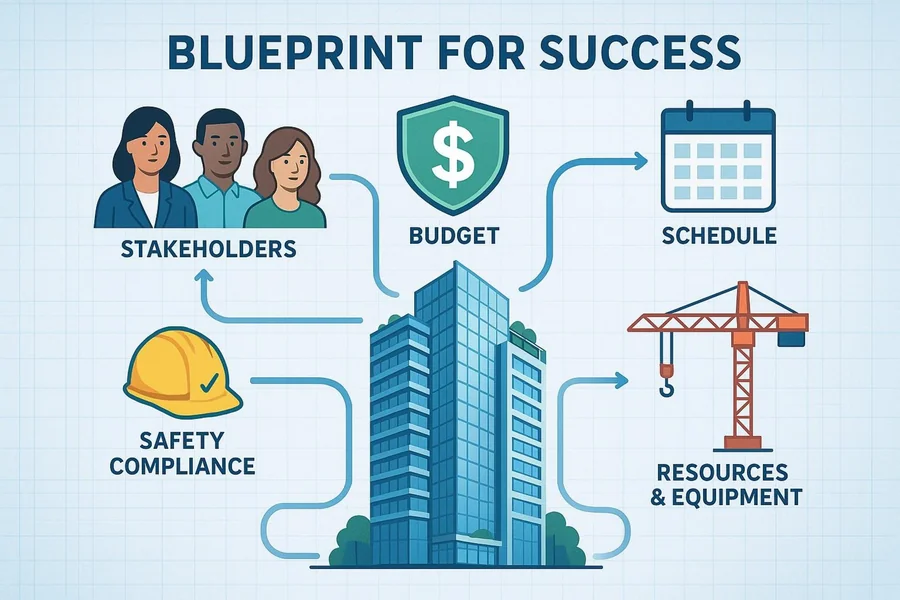
Proper planning in large construction projects creates a clear, step-by-step roadmap that connects every stakeholder, resource, and deadline to the overall project goals. It acts as a “blueprint for success,” making sure that all major tasks-from site preparation to final inspections-happen in the right order. Without this strong base, projects can face a chain reaction of delays, budget problems, and safety issues that can stop even the biggest developments in their tracks.
In commercial development, construction supports economic growth and shapes cities. But the actual building work depends on the quality of the planning that comes first. For example, keeping the public safe during a city project means planning early for protection systems like a sidewalk shed as part of the site logistics.
These features are not minor details; they are key parts of a project plan that focuses on code compliance and public safety from the very beginning.
What Is the Role of Proper Planning in Large Construction Projects?
Why Do Large Projects Depend on Detailed Planning?
Large projects are highly complex and involve many connected stages. Unlike smaller jobs, they require a wide mix of materials, people, and equipment that all need to work together smoothly. Detailed planning sets a clear direction and specific goals so everyone understands the project’s purpose and works toward the same outcome. This clarity matters because, in ground-up development, each phase relies on the one before it.
Planning also acts as a key communication tool. It closes the gap between the architect’s ideas and what can actually be built within the limits of the site, the rules, and the budget. By defining the scope and goals early on, planners reduce confusion and miscommunication that often cause projects to fail. Planning gives structure to project management long before construction begins.
How Does Planning Influence Project Outcomes?
The effect of planning on results is supported by strong data. Organizations with strong project management practices, including detailed planning, reach their goals about 2.5 times more often than those that do not. At the same time, McKinsey & Company reports that large construction projects often take 20% longer than planned and can go up to 80% over budget. These numbers show how poor planning can hurt a project’s success.
Good planning directly affects the three main project limits: time, cost, and quality. By spotting possible problems early, careful planning avoids expensive changes later, when they are harder and more costly to fix. Research shows that time spent on detailed planning can reduce implementation costs by 10% to 50%. A well-planned project is more stable, safer for workers, and more likely to deliver a finished product that meets or exceeds what the client expects.
Key Benefits of Proper Planning in Large Construction Projects
Increases Cost Certainty Through Budget Management
Budgeting is one of the most important parts of planning. Construction projects are known for cost overruns, but a detailed budget includes all expected costs-materials, labor, permits, and unexpected items.
Accurate estimates let managers set realistic spending limits and keep the project financially sound from start to finish. This requires a clear view of project needs and close attention to market changes, like rising steel or concrete prices.
Planning also includes setting up contingency funds. These financial “buffers” help keep the project steady when surprises occur. By managing money in a planned way, teams can find savings and reduce the risk of going over budget.
Careful budget control protects the owner’s investment and builds confidence among investors and other stakeholders who expect transparency and responsible spending.
Minimizes Delays by Optimizing Scheduling and Sequencing
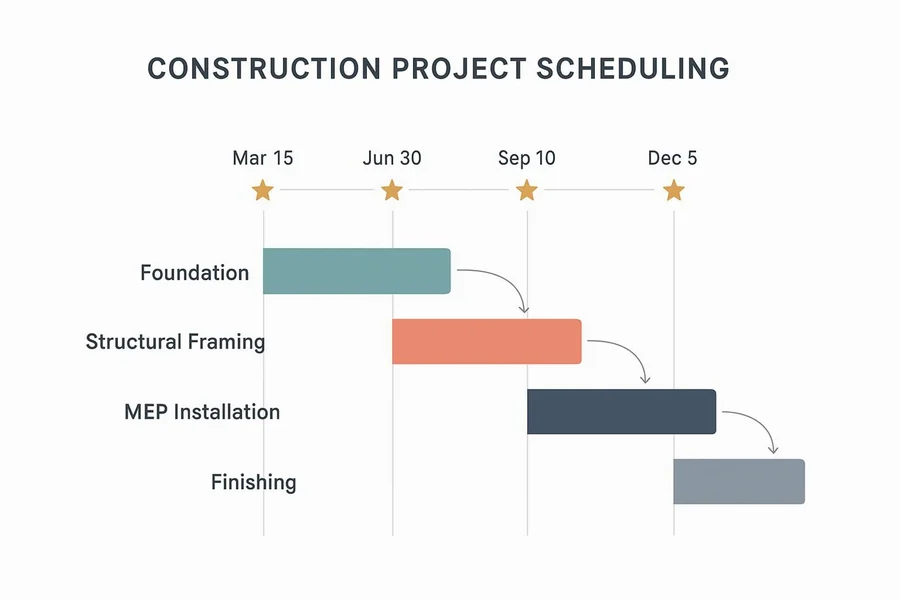
A strong plan lays out a project timeline with start and finish dates, milestones, and deadlines. Good scheduling keeps work moving, avoiding holdups that happen when the right people or materials are not available on time. Breaking the job into smaller phases allows planners to assign workers and equipment effectively so each team is where it needs to be.
Sequencing is especially important for ground-up work, where tasks like foundation curing must finish before framing can start. Organizing these dependencies in a logical order helps meet deadlines and keeps the project from stalling. When everyone-from architects to specialty trades-follows the same schedule, the project moves forward with steady, coordinated progress.
Reduces Project Risks with Proactive Mitigation Strategies
All construction projects face risks like bad weather, material shortages, and safety concerns. Planning makes it possible to identify and review these risks before they show up on site. By creating response plans and backup strategies in advance, managers can deal with unexpected events quickly and limit their impact on time and budget.
Risk management also protects people. Planning includes developing safety procedures and adding protective structures and systems to the site. This early attention lowers the chance of costly surprises and makes the project more resilient, so the team can handle problems without hurting safety or overall project stability.
Improves Coordination and Communication Among Stakeholders
Large projects bring together many groups: owners, designers, engineers, suppliers, and subcontractors. Good planning supports coordination between these groups by setting clear communication methods and defined roles. A written plan becomes the main reference document, aligning everyone’s efforts and clarifying responsibilities.
Regular progress meetings and updates, scheduled as part of the plan, keep everyone informed and allow quick problem-solving. This teamwork-focused approach reduces conflicts, which is especially important on busy construction sites. When information is clear and timely, decisions can be made faster and changes handled without losing track of the project goals.
What Are the Critical Elements of Construction Planning?
Defining Project Scope, Vision, and Objectives
The first key step in planning is to define the project scope clearly. This means explaining the project’s purpose, main goals, and expected outputs. Setting these limits helps keep the project focused and prevents “scope creep,” where extra tasks slowly add more cost and time. Understanding the client’s vision from the start helps the team focus on what matters most and make smart choices that support the desired final result.
Resource Allocation: Labor, Equipment, and Materials
Good resource management is central to smooth project delivery. Planning identifies what resources are needed-materials, special equipment, and skilled workers-for each phase. By estimating these needs carefully, planners can avoid shortages, cut down on waste, and improve productivity. This helps the project move ahead without unnecessary stops and supports both time and cost savings.
Timeline Development: Milestones and Scheduling Tools
Building a realistic schedule is a core part of planning. The team must list project phases, specific tasks, and major milestones, while also noting which tasks depend on others. Tools such as Gantt charts and modern construction management software help visualize the schedule and track progress in real time. A clear schedule gives everyone a shared reference for managing resources and limiting delays.
Budgeting and Cost Control Processes
Accurate cost estimates and budget planning help prevent financial problems. A solid plan includes a detailed breakdown of costs and highlights where savings may be possible. With strong cost control processes, project managers can track spending from start to finish and keep the project within its financial limits.
Quality Assurance and Performance Benchmarks
Planning plays a major role in protecting quality. A detailed plan sets material requirements, construction methods, and clear quality standards. It also defines performance targets and includes quality checks, such as regular inspections and testing. This approach, often detailed in technical guidelines found at https://novaconstructionservices.com/, helps deliver a finished structure that meets industry rules and client expectations and reduces the need for rework.
Addressing Legal and Regulatory Compliance
Construction must follow many laws and rules, including zoning codes, building codes, and safety standards. A strong plan makes sure all needed permits and approvals are in place before work begins. Handling compliance early helps avoid legal disputes, fines, and schedule delays, and it protects everyone involved in the project.
Environmental Analysis and Sustainability Planning
Today, sustainable construction is more important than ever. Planning gives teams the chance to review environmental impacts and choose greener options, such as energy-efficient designs and low-impact materials. By reviewing environmental effects early, planners can meet regulations and improve the project’s public image, while also supporting broader social and environmental goals.
How Does Technology Enhance Planning in Construction?
The Use of Building Information Modeling (BIM)
Building Information Modeling (BIM) has changed how planning works by allowing teams to create detailed digital models of a project. BIM makes planning more accurate and efficient by letting stakeholders see the project in 3D before building starts. This supports better collaboration and helps teams compare design options and catch clashes or structural issues early.
With BIM, teams can test different construction sequences and see how each one affects time and cost. This level of detail lowers error rates during actual construction and helps ensure that all building elements fit together as planned. BIM models can also support the long-term operation of the building, acting as a digital record for maintenance and facility management after completion.
Project Management Software for Schedule and Cost Tracking
Modern project management software gives a clear picture of the whole project and supports real-time teamwork. These tools help managers track progress, monitor costs, and adjust timelines when needed. With all key information stored in one place, teams can make decisions based on current data rather than guesswork.
Platforms like Touchplan and other cloud tools allow updates directly from the site, so the planning team always knows what is happening. This visibility helps fix issues quickly and reduces schedule slippage. Many of these systems also offer resource planning and document control features, which simplify paperwork and reduce administrative delays.
Role of Artificial Intelligence in Predictive Planning
Artificial Intelligence (AI) is becoming a valuable tool for predictive planning on large projects. By reviewing data from past jobs, AI can find patterns and forecast likely risks or delays. This gives project managers an early warning and allows them to adjust resources and schedules before problems escalate.
AI can also improve scheduling by testing large numbers of possible work sequences to find the most efficient one. This helps manage time, cost, and resources in a more precise way than traditional methods. As AI tools improve, they will offer even more useful insights for planners who want to stay competitive in the industry.
Common Planning Challenges and How to Overcome Them
Dealing with Resource Shortages
Shortages of materials or skilled labor are common issues in big projects. To handle this, planners need to study the market carefully and build strong relationships with several suppliers. Securing labor and materials early and identifying acceptable alternatives increases flexibility when supply problems arise. Resource management software that shows real-time availability also helps teams adjust plans quickly during shortages.
Responding to Unforeseen Site Conditions
Unexpected site conditions-like weak soil or unknown underground utilities-can disrupt a project plan. The best way to reduce this risk is to invest in detailed site studies and feasibility work. Soil testing, surveys, and early investigations can reveal many hidden issues. Keeping the plan flexible and including time and budget allowances for site surprises helps the team adapt without stopping the project completely.
Managing Regulatory Changes and Permit Delays
Rules and regulations change often, and permit delays are a frequent cause of schedule slips. To reduce these problems, planners should work with local agencies as early as possible. Including extra time in the schedule for reviews and staying informed about possible rule changes help avoid major setbacks. Clear documentation and assigning a person or team to handle permits and compliance can speed up approvals.
Balancing Quality, Cost, and Time
Finding the right balance between quality, cost, and time is one of the hardest parts of managing a construction project. Overcoming this challenge calls for careful planning and honest communication with the client. By agreeing on priorities early, the team can make smart trade-offs when needed. Using performance data and tracking tools helps keep quality at an acceptable level while controlling cost and schedule, without risking safety or structural strength.
Frequently Asked Questions About Construction Project Planning
Why Is Ground-Up Construction Especially Dependent on Careful Planning?
Ground-up construction starts with an empty site, so every stage-from clearing and excavation to building services and finishing-must be planned from scratch. There is no existing structure to guide the work. Mistakes in early steps, such as poor soil treatment or incorrect layout, can cause serious problems later. Careful planning maps these dependencies and reduces the chance of failures that can threaten the whole project.
Ground-up projects also tend to involve more zoning, environmental, and infrastructure regulations that must be addressed before work begins. Planning acts as the main guide in these situations, covering permits, design coordination, logistics, and resource needs. Without a strong plan, these projects can face large budget swings, labor issues, and long delays.
What Is the Critical Path Method and How Does It Prevent Delays?
The Critical Path Method (CPM) is a planning tool that finds the sequence of dependent tasks that sets the shortest possible project duration. Tasks on this sequence are called “critical” because any delay in them delays the whole project. For example, if a slab must cure for seven days before framing starts, that curing period is part of the critical path.
CPM helps prevent delays by showing where the schedule is tightest and where there is little or no float time. Managers can focus attention and resources on these tasks and prepare backup plans to handle issues that may affect them. By staying focused on critical activities, the team keeps the project moving and avoids spending time on lower-priority tasks at the wrong moment.
How Can Early Planning Reduce Cost Overruns?
Early planning cuts down on cost overruns by spotting risks and challenges before work begins. A detailed cost review and the creation of contingency funds during pre-construction give managers better control over money, even when surprises occur. This avoids the kind of last-minute, high-priced fixes that happen when teams react without a plan.
Early planning also supports better contracts with suppliers and subcontractors. When project needs are clearly defined long before work starts, managers can negotiate better pricing and avoid extra charges linked to urgent orders. Studies from the Construction Industry Institute show that strong planning at the front end can reduce total project costs by up to 20%.
What Are the Most Important Success Factors in Large Project Planning?
Key success factors in large project planning include clear objectives, strong communication, and smart use of technology. A project with a well-defined scope and measurable goals stands a much better chance of success than one with vague expectations. Close cooperation between planners, designers, and field teams also helps create plans that work in real conditions.
Flexibility is another major factor. A good plan is not fixed forever; it is updated as conditions change. Regular reviews and a willingness to adjust schedules or resource use help managers stay in control. A steady focus on safety and quality at every stage supports a final product that is delivered on time and built to last.
Final Thoughts on Improving Large Construction Outcomes with Better Planning
Looking ahead, planning in construction is moving from simple scheduling to a more connected and collaborative process. “Lean Construction” ideas, which focus on creating value and reducing waste, are being built into planning more often. This approach encourages ongoing improvement and closer cooperation between designers and field teams. By respecting practical feedback from workers as much as strategic input from planners, organizations can build project plans that are both realistic and resilient.
Sustainability is also becoming a central part of planning rather than an optional add-on. Future planning methods will likely focus more on life-cycle thinking, looking at environmental and financial impacts from construction through operation and eventual demolition.
By adopting these forward-looking planning practices, the construction industry can improve project results while supporting a more efficient and sustainable built environment. The aim is to move away from constant crisis response and toward a planned, data-based way of working that supports high performance at every stage of a project.