
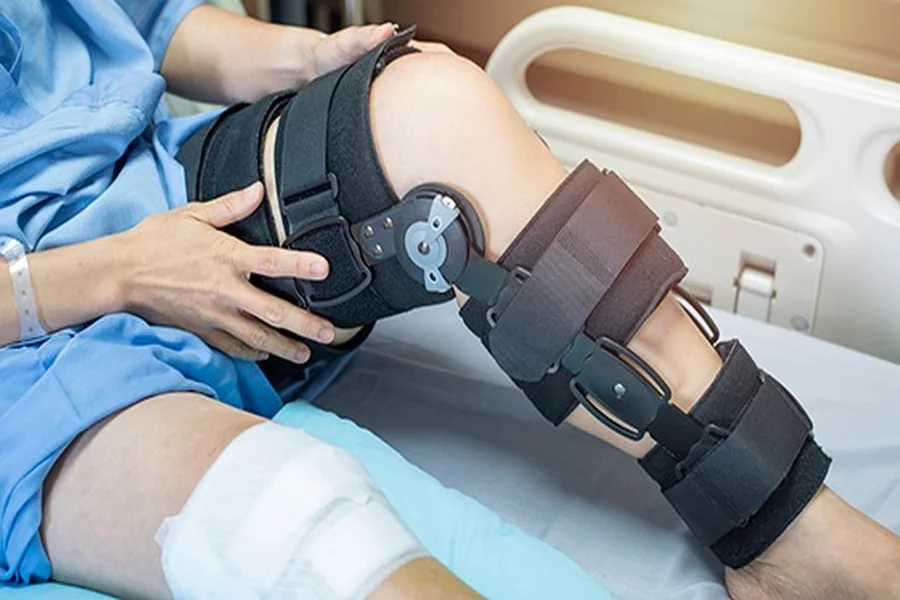
If you’ve ever walked into a medical store with knee pain, you’ve probably faced this confusion: Should I buy a knee cap or a knee brace?
Choosing the wrong support can either give minimal relief or sometimes even delay recovery.
Let’s get started!
First, Understand What’s Causing Your Knee Pain
Knee pain usually occurs because of these reasons:
- Muscle strain or overuse
- Early arthritis
- Ligament injury
- Meniscus irritation
- Weak knee muscles
- Swelling after activity
- Post-injury instability
The type of support required depends primarily on whether the knee necessitates compression or stability.
Knee Pain Patterns and Support Needs
Not all knee pain is the same. Recognizing the type of pain can guide whether a knee cap or brace is appropriate.
Types of Knee Pain
- Anterior Knee Pain – Anterior knee pain, often resulting from patellar misalignment or overuse, typically responds well to the use of knee caps.
- Medial or Lateral Pain – Pain on the inside or outside of the knee; this could mean a strain on the ligaments or problems with the meniscus, and a brace is often needed.
- Swelling and Inflammation – Persistent swelling may need a combination of compression (knee cap) and stabilization (brace).
- Instability or Buckling – If your knee feels like it might buckle, wearing a brace is usually necessary.
Fully understanding pain patterns helps prevent using the wrong support and accelerates recovery.
What Is a Knee Cap?
A knee cap (also called an elastic knee sleeve) is a stretchable support worn around the knee joint.
Main Function
Provides compression and mild support.
When a Knee Cap Is the Right Choice
Use a knee cap if you have:
- Mild knee pain
- Early osteoarthritis
- Knee stiffness while walking
- Pain during climbing stairs
- Gym or running-related soreness
- Long standing or work fatigue
- Minor swelling
It works best when the joint is stable but painful.
How a Knee Cap Helps Scientifically
Compression from the sleeve does these:
- Improves blood circulation
- Reduces mild swelling
- Enhances joint awareness (proprioception)
- Keeps muscles warm
- Supports patella tracking
This reduces strain during daily movement.
What Is a Knee Brace?
A knee brace is a more structured support that may include:
- Straps
- Hinges
- Reinforced side stabilizers
- Adjustable compression
Its main function is joint stabilization.
When You Should Use a Knee Brace
A knee brace is recommended when there is instability or injury, such as:
- Ligament injury (ACL, MCL, LCL)
- Knee giving way while walking
- Post-injury recovery
- Meniscus injury
- Post-surgery rehabilitation
- Moderate to severe arthritis
- Sports injury protection
If your knee feels unstable rather than just painful, a brace is usually the better option.
Knee Cap vs Knee Brace
| Feature | Knee Cap | Knee Brace |
| Support Level | Mild | Moderate to Strong |
| Compression | Yes | Yes |
| Stability Control | Minimal | High |
| Best For | Pain & stiffness | Injury & instability |
| Daily Wear | Comfortable | Limited duration |
| Sports Injury Recovery | Not ideal alone | Recommended |
| Arthritis Support | Early stages | Advanced stages |
Can the Wrong Support Cause Problems?
Yes.
Using only a knee cap when ligaments are injured may:
- Allow excessive movement
- Delay healing
- Increase reinjury risk
On another note, wearing a rigid brace unnecessarily can:
- Cause muscle dependence
- Reduce natural joint strength over time
Support should assist movement, not replace muscle function.
Do You Need Support During Exercise?
Use a Knee Cap During:
- Walking
- Light workouts
- Yoga
- Cycling
- Daily activities
Use a Knee Brace During:
- Sports recovery
- Heavy training
- Returning after injury
- Activities involving twisting or pivoting
Choosing the Right Knee Support Based on Activity Level
Your activity level on a daily basis is a big factor in determining whether a knee cap or knee brace is better for you. The same knee support may not work equally well for sedentary individuals, active workers, or athletes.
Low-Activity Individuals
People with desk jobs or limited physical activity usually benefit from:
- Knee caps for mild stiffness
- Compression during walking or household tasks
- Improved circulation without restricting movement
Moderately Active Individuals
Those who stand or walk for long hours, such as teachers or retail workers, may require:
- Knee caps for daily fatigue
- Adjustable braces during flare-ups
- Support during prolonged standing or stair climbing
Athletes and Physically Demanding Work
Sports participation or heavy labor increases joint stress.
In such cases, this usually happens:
- Knee braces provide better ligament protection
- Stabilization reduces reinjury risk
- Controlled movement supports safe return to activity
Matching knee support with activity demands helps prevent unnecessary strain.
How Long Should You Wear Knee Support?
General guidance:
- During activity or pain episodes
- Remove during rest or sleep (unless advised)
- Avoid continuous all-day dependency
Muscle strengthening is always essential for long-term relief.
Importance of Muscle Strengthening Alongside Knee Support
Knee supports provide external assistance, but long-term joint health is mainly based on muscle strength around the knee.
Key Muscles Supporting the Knee
Strong surrounding muscles helps reduce joint load:
- Quadriceps (front thigh muscles)
- Hamstrings (back thigh muscles)
- Calf muscles
- Hip stabilizers
Weak muscles can make knee pain come back, even when you use supports.
Why Strengthening Matters
Exercise helps:
- Improve joint stability naturally
- Reduce dependence on braces
- Enhance shock absorption
- Prevent future injuries
- Improve balance and movement control
Common physiotherapy exercises include all these:
- Straight leg raises
- Mini squats
- Step-ups
- Hamstring stretches
Knee caps or braces should support recovery while rehabilitation exercises restore natural strength.
Signs You May Need to Upgrade from Knee Cap to Brace
Consider switching if you notice:
- Knee buckling
- Clicking with pain
- Swelling after minor activity
- Difficulty bearing weight
- Feeling of looseness in joint
Such manifestations are linked to structural stress rather than simple weariness.
When a Doctor or Physiotherapist Should Be Consulted
Seek evaluation if:
- Pain lasts more than 1–2 weeks
- Swelling persists
- Knee locks or gives way
- Injury occurred during sports or fall
- Walking becomes difficult
Knee supports help control symptoms but shouldn’t be considered a replacement for medical assessment.
Conclusion
Choosing the right knee support depends on your pain, activity level, and joint stability. Knee caps offer gentle compression for mild pain or stiffness, while knee braces provide stronger stabilisation for injuries, instability, or advanced arthritis. Using the wrong support can delay recovery, so pairing the device with muscle-strengthening exercises is essential. Reliable options such as Leeford Ortho knee braces and knee caps combine comfort with effective joint protection. Remember, supports assist movement; they don’t totally replace it. When used correctly alongside exercise, posture awareness, and professional guidance, they help reduce pain, prevent reinjury, and maintain long-term knee health.