
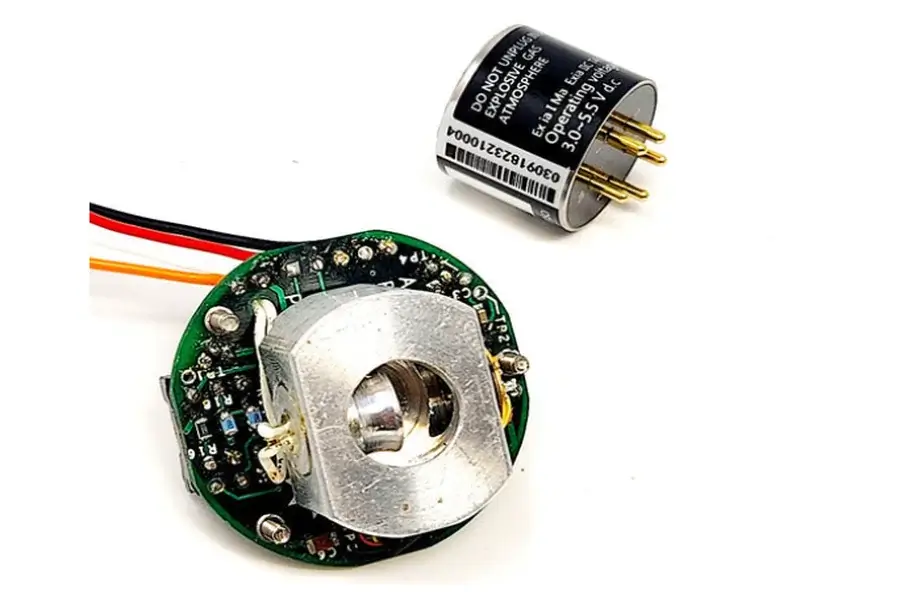
In today’s world of smart buildings and energy optimization, HVAC systems play a critical role not only in maintaining comfort but also in ensuring health and sustainability. At the heart of this transformation is an often-overlooked yet powerful component — the NDIR CO₂ sensor. These sensors have become indispensable in modern heating, ventilation, and air conditioning systems, where they help regulate indoor air quality and optimize energy usage.
If you’re looking for reliable and accurate gas detection technology, including NDIR sensors for HVAC integration, visit https://mgs-technology.com/products/gassensors/ to explore available solutions tailored for industrial and commercial needs.
What Is an NDIR CO₂ Sensor?
NDIR stands for Non-Dispersive Infrared, a technology used to measure the concentration of carbon dioxide in the air. Unlike chemical sensors, NDIR sensors detect CO₂ by measuring how much infrared light is absorbed by gas molecules in a sample chamber. Because each gas absorbs light at a specific wavelength, NDIR sensors can accurately detect and quantify CO₂ levels with minimal cross-sensitivity to other gases.
Why does this matter in HVAC? Because CO₂ is a key indicator of indoor air quality (IAQ) and occupancy. By integrating NDIR CO₂ sensors into HVAC systems, building managers can respond to real-time changes in air composition — adjusting airflow, ventilation rates, or even triggering alarms if dangerous thresholds are reached.
Why Use NDIR CO₂ Sensors in HVAC Systems?
1. Improved Energy Efficiency
Traditional HVAC systems often rely on fixed ventilation rates. This means that regardless of whether a room is occupied or empty, the same volume of outside air is conditioned and circulated — resulting in unnecessary energy use.
NDIR CO₂ sensors allow systems to adopt demand-controlled ventilation (DCV). When CO₂ levels rise (indicating higher occupancy), the system boosts airflow. When levels drop, ventilation slows — reducing energy waste by up to 30% in some buildings.
2. Enhanced Indoor Air Quality
High CO₂ levels are directly linked to fatigue, poor concentration, and headaches. In workplaces, schools, and hospitals, this affects both health and productivity. By continuously monitoring CO₂ with NDIR sensors, HVAC systems can ensure optimal air exchange and prevent IAQ from falling below acceptable standards.
3. Regulatory Compliance and Safety
Building codes and standards (like ASHRAE 62.1) increasingly require monitoring of IAQ. NDIR CO₂ sensors provide the accurate, long-term data needed for compliance. In critical environments — such as laboratories or production facilities — maintaining safe CO₂ levels is essential to prevent exposure risks.
4. Long-Term Stability and Low Maintenance
One of the biggest advantages of NDIR technology is its durability. These sensors typically offer a lifespan of 10+ years, require minimal recalibration, and maintain stable readings over time — making them ideal for continuous HVAC operation.
Where Are NDIR CO₂ Sensors Used in HVAC?
- Commercial Buildings: Offices, conference rooms, coworking spaces
- Educational Facilities: Schools, universities, lecture halls
- Healthcare: Clinics, hospitals, nursing homes
- Industrial Environments: Manufacturing plants, warehouses
- Public Venues: Theaters, malls, airports
In each of these environments, occupancy can vary dramatically throughout the day — making real-time CO₂ monitoring crucial for efficient air handling.
Key Features to Look For in NDIR CO₂ Sensors for HVAC
When choosing an NDIR CO₂ sensor for HVAC applications, consider the following:
- Measurement Range: Standard indoor range is 400–5000 ppm
- Accuracy: ±(50 ppm + 3% of reading) or better
- Response Time: Fast t90 response (<60 seconds) is ideal for dynamic environments
- Maintenance Requirements: Look for models with auto-calibration and long-term stability
- Integration: Must support Modbus, BACnet, or analog outputs (0–10V/4–20mA) for HVAC controller compatibility
- Compact Design: Important for easy duct or wall mounting
Some advanced models also feature temperature and humidity sensors, allowing for multi-parameter IAQ control from a single device.
Installation Considerations
Proper placement is crucial to getting accurate and useful data:
- Avoid direct airflow from vents
- Install at breathing level (typically 1–2 meters above the floor)
- Position away from windows and doors to prevent skewed readings
- Consider duct-mounted versions for centralized ventilation monitoring
Professional calibration on installation is recommended, although many sensors feature automatic baseline calibration for ongoing accuracy.
The Bottom Line
By integrating NDIR CO₂ sensors into HVAC systems, building operators gain precise control over air quality and energy efficiency. These sensors enable systems to respond dynamically to occupancy levels, prevent poor IAQ, and comply with modern ventilation standards — all while cutting down on unnecessary energy consumption.