
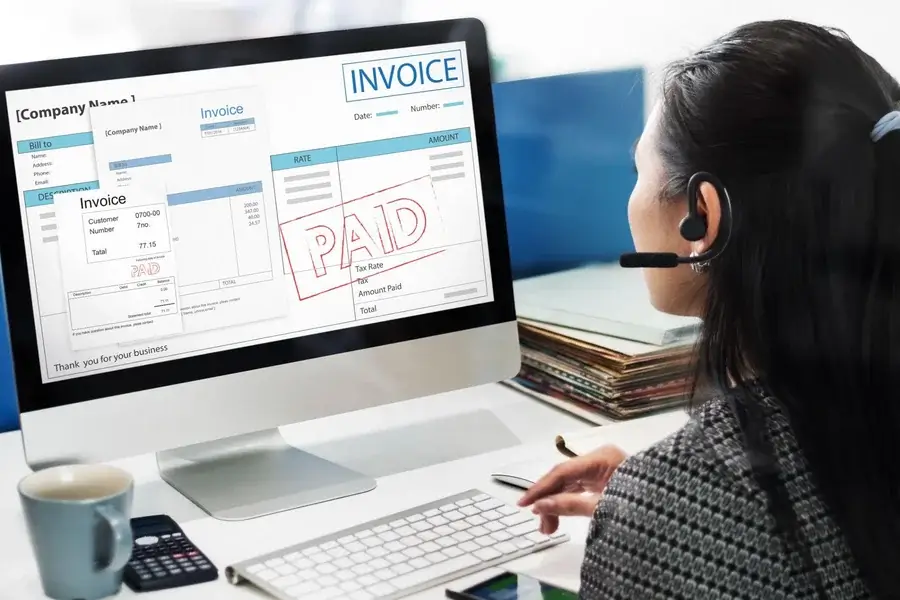
What would be even more powerful about an effective e-way bill plan is the ability to identify a supply chain risk before it turns into an issue. In India, e-way bills have also reached an all-time high of 131.9 million in July 2025, demonstrating the extent to which it is integrated into the interstate goods movement. Companies lower the risk by tracking all consignments of over 50,000 through an e-waybill, improve transparency, and eliminate unnecessary delay or even fines.
By using effective eWay bill formats, business leaders can better predict potential bottlenecks. As e-way bills increased 17.6% year-on-year to 112 million in December 2024, it is obvious that this is not merely a tool to regulate but one of the potent tools to protect your logistics, to make things more efficient, and to reinforce resilience. Continue reading to discover how you may develop a bulletproof e-way bill plan for your business.
What Makes an Eway Bill Improve Visibility?
Dependence on a robust supply chain relies on adequate visibility, and this is where an e-way bill goes beyond being a compliance tool. It is a real-time tracking layer for the passage of goods at all levels. Upon a shipment, the waybill automatically seizes information like origin, destination, transporter ID, and vehicle number. These features will make it a continuous flow of information, whereby business organizations will be able to keep track of each step without necessarily having to make physical changes.
The advantage is even stronger in times of interruption. In case a shipment is postponed or redirected, the new e-way bill can assist teams to know what has been altered and take immediate action. This helps to minimize blind spots, smooth communication, and make early decisions. This openness, in the long run, promotes greater discipline and accuracy in the logistics operations.
Why Does an Eway Bill Reduce Major Risks?
- Early Identification of Abnormal Diagnoses: The waybill also notifies the teams of routes to be taken and a mismatch in vehicle details before they are cleared at the checkpoints.
- Reduced Risks of Manual Mistakes: The automated entry of Eway bills reduces the likelihood of errors, which typically lead to penalties or shipment delays.
- Less Opportunity for Fraud: Having all the shipped goods logged in digitally, it becomes hard to create a fake or an imitated record.
- Stronger Audit Preparation: Companies are better equipped to comply with the checks and reviews since all the movements are registered using the e-waybill.
Where Can an Eway Bill Help in Cross-Border Movement?
- Smooth Pre-Export Movement: The e-way bill helps in tracking goods that are shipped to ports or export hubs and eliminates delays that are caused during pre-shipment.
- Improved Correspondence to Export Documents: Information stored on the e-waybill is similar to the necessary export documents, and it assists in preventing mismatches at customs.
- Better Coordination of Partners: The partners in freight forwarding and customs require good data, and the waybill provides a standard format that all people should use.
When Does an Eway Bill Enhance Daily Efficiency?
- Improved Dispatch Planning: Movement is taken as the teams can arrange movement much faster since the details of shipment, such as quantity and value, can be seen clearly in the waybill.
- Shorter Checkpoint Delays: Authenticated electronic information assists vehicles in passing through inspection stations in a shorter time.
- Reduced Manual Processing: Logistics teams will save time on physical papers with the automation of documentation via the e-way bill.
- Improved Refining of the Coordination of Warehouses: Warehouse teams utilize e-waybill data to make docks and staff ready prior to the arrival of a shipment.
Which Supply Chain Nodes Gain Most From a Unified Eway Bill?
The supply chains of modern society work with numerous touchpoints through the suppliers, factories, distribution centers, and transport cooperation. A single e-waybill setup unites all these nodes under a single stream of information. Every point knows when a shipment is shipped, stalled, or when it is going to be shipped. It will decrease the confusion, enhance the accuracy of inventory, and increase the speed of preparation at receiving points.
Such a synchronized environment contributes to companies balancing inventory more, simplifying the packaging process, and arranging vehicle scheduling without a fight. It is also helpful in planning when the demand is at its highest point, since the waybill helps show a dependable movement pattern. With time, this system of one becomes a reliable foundation and assists in making teams more resilient, efficient, and prepared to expand in the future.
Multi-node supply chains can operate with confidence, as the e-way bill takes care of all that is happening in the background.
How Can an Eway Bill Build a Stronger Supply Chain?
With an effective waybill plan, businesses have improved control and clearer information, as well as easier coordination at each movement stage. It minimizes the risks, enhances visibility, and enables faster responses to disruptions by the teams. The single approach enables businesses to create a stable, predictable, and growth-ready supply chain.
An ecosystem that simplifies international transport can be even more useful for organizations that must deal with it. Here, the solution can be Amazon Global Selling, which will take Companies benefit from legitimate and well-organized export processes. It acts as a stabilizing factor for teams that want to enhance cross-border operations.