
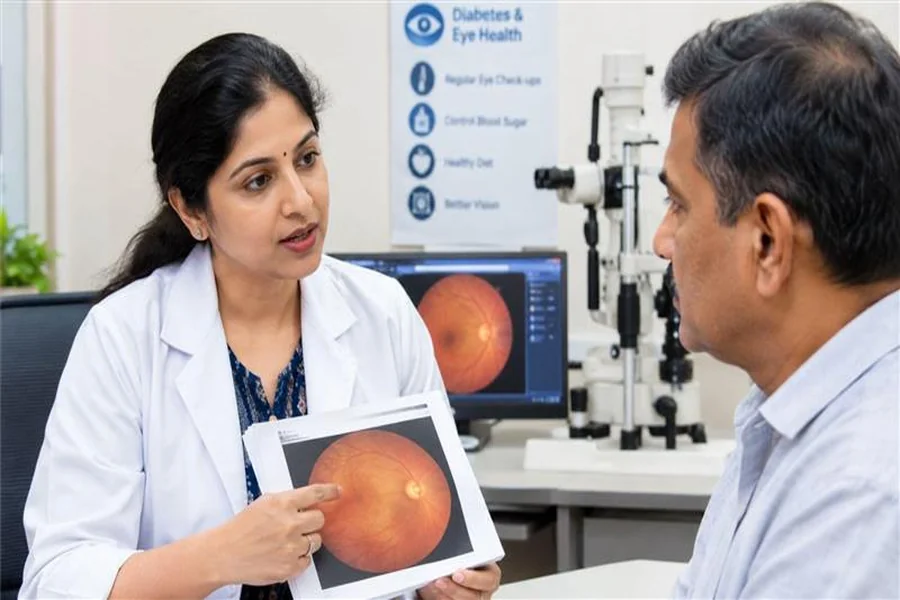
Diabetes can affect more than blood sugar levels. Over time, it may also influence the delicate blood vessels and tissues inside the eyes, sometimes before a person notices any change in sight. This makes ongoing attention to eye health an important part of living with diabetes.
An ophthalmologist can examine the eyes closely, identify early changes and recommend suitable care when needed. Regular monitoring also gives people a better opportunity to protect their sight as their health needs change.
Regular Eye Exams for Early Detection
Diabetes-related eye changes may develop quietly. A regular examination allows an eye doctor to look beyond everyday vision problems and assess the health of the retina and other eye structures.
During an examination, the doctor may:
- Assess changes affecting vision
- Examine the retina closely
- Recommend further tests when required
Monitoring for Diabetic Retinopathy
Diabetic retinopathy affects blood vessels within the retina. An eye specialist can monitor these vessels and identify signs such as leakage, swelling or abnormal changes before they begin interfering noticeably with everyday sight.
Monitoring can help with:
- Tracking retinal changes
- Deciding whether treatment is needed
- Planning suitable follow-up visits
Checking for Diabetic Macular Oedema
Fluid can sometimes collect around the macula, the part of the retina responsible for detailed central vision. This condition requires careful assessment because it may affect activities such as reading, working or recognising faces.
An examination can help:
- Detect swelling around the macula
- Assess changes in central vision
- Guide further treatment decisions
Managing Diabetes-Related Eye Changes
Diabetes can affect the eyes in different ways, so treatment is not identical for everyone. The ophthalmologist considers the type and extent of the eye changes before suggesting the next step.
Management may involve:
- Observation and regular monitoring
- Medicines or specialist procedures
- Changes to the follow-up schedule
Laser Treatment and Other Procedures
Some diabetes-related retinal problems may require treatment rather than monitoring alone. Depending on what the examination shows, the doctor may discuss laser treatment, eye injections or other procedures intended to manage specific changes affecting the retina.
Treatment decisions consider:
- The condition of the retina
- Changes affecting vision
- Individual eye health needs
Guidance on Blood Sugar and Eye Health
Good eye care also involves understanding the connection between overall diabetes management and eye health. The doctor may encourage patients to follow their wider medical care and discuss any noticeable changes in sight promptly.
Helpful habits include:
- Following prescribed diabetes care
- Attending recommended health reviews
- Reporting new visual symptoms early
Preventing Vision Loss through Follow-up Care
Eye health can change over time, even when vision feels normal. Follow-up appointments allow the doctor to compare findings, watch existing concerns and respond when something has changed.
Regular follow-up supports:
- Ongoing monitoring of the retina
- Timely adjustments to treatment
- Better awareness of eye health changes
Conclusion
Protecting vision while living with diabetes requires attention even when the eyes seem perfectly comfortable. Regular examinations help identify changes that may otherwise remain unnoticed until they begin affecting sight. Working with an ophthalmologist also provides ongoing guidance, monitoring and treatment when necessary. Combined with responsible diabetes management and timely follow-up, professional eye care can help people stay more informed about their eye health and take appropriate action whenever changes appear.