

Exploring backup power solutions, especially whole-house battery backups, is essential for maintaining uninterrupted electricity during outages. These systems provide peace of mind and sustainability, as they rely on renewable energy sources like solar power. Not only do they promise continuous power, but they also contribute to a greener planet. With the growing popularity of solar energy, understanding the viability of a battery backup system to support your whole home is crucial. This article delves into how these systems function, factors for sizing, and selecting the right battery option.
Whole House Battery Backup Explained
What Is a Whole House Battery Backup?
A whole house battery backup system accumulates energy from sources like solar panels or the grid, storing it for later use during outages. Unlike traditional generators, these systems are quiet, environmentally friendly, and often more reliable. They consist of several components, including inverters, batteries, and smart management systems. Their role is not just to store energy, but also to convert it from DC, stored in batteries, to AC, used by home appliances. As the technology evolves, these systems become smarter, managing power distribution efficiently and providing homeowners with greater control. Some systems even feature remote management applications, offering insights and real-time control over energy usage and storage.
How Do These Systems Work?
Whole-house battery backups operate by collecting and storing energy when available, and disbursing it when needed. They achieve this through inverters that convert stored DC electricity into AC power for home use. When paired with solar panels, they harness renewable solar energy, storing excess power generated during sunny periods. During a power outage, the system automatically switches to battery supply, maintaining the electricity flow to your home. High-efficiency solar input allows quick recharging, while dual voltage output ensures compatibility with diverse home appliances, from refrigerators to central air conditioning. With advancements like remote control and scalability features, these systems can serve both immediate and extended power needs efficiently.
Can It Power Your Entire Home?
Sizing and Capacity Requirements
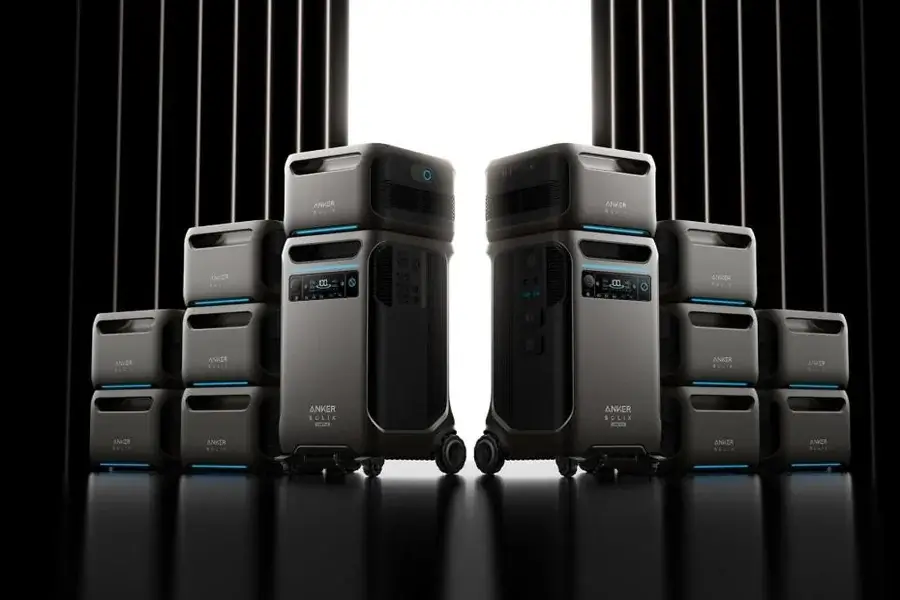
The ability of a battery system to power an entire home largely depends on its size and capacity. Understanding these requirements is critical for determining suitable configurations. Home energy consumption varies; hence, accurate estimation of daily kilowatt-hour (kWh) usage is essential. The system’s capacity should exceed household demand to ensure uninterrupted power. Scalability is a vital feature, enabling expansion of battery capacity as needs evolve. Products featuring plug-and-play scalability, like the Anker SOLIX F3800 Plus, provide an adaptable solution accommodating from 3.84kWh to 53.8kWh, ensuring flexibility for various home sizes and energy requirements.
Realistic Power Scenarios
Envisioning realistic power scenarios helps in comprehending the capabilities of your battery backup. Calculate essential appliances and systems that need power, from refrigerators and lighting to HVAC and security systems. The Anker SOLIX’s ability to provide up to 6,000W of AC output per unit exemplifies its competence. By efficiently managing power distribution, it maintains vital operations during outages. With dual voltage output, it can power both standard and high-demand equipment, ensuring complete home support. Employing remote control features via apps allows monitoring and optimization, orchestrating a seamless power experience.
Sizing Your Battery System for Whole-Home Power
Estimating Your Home’s Energy Needs
Calculating your home’s energy needs begins with understanding daily consumption patterns. Household energy monitors or utility bills offer insights into average usage. Focus on essential power needs during outages; list critical appliances and systems with their power ratings. Measure peak demand times to understand the maximum required capacity. Such assessments guide appropriate battery sizing, ensuring reliable performance. Consider seasonal variations too, as heating or cooling demands can significantly impact consumption. Tailoring battery systems to daily operational needs prevents shortfalls and optimizes investment.
Choosing the Right Battery Capacity
Selecting the correct battery capacity involves aligning storage potential with your calculated energy needs. Systems like the Anker SOLIX F3800 Plus offer flexible configurations, expandable up to 53.8kWh to match diverse requirements. Consider future energy demand growth when sizing your system. Assessing longevity is also crucial; choose robust batteries with extended lifespans and warranties to guarantee sustained performance. Evaluate products offering both immediate capacity and potential for scaling. Options with simple installation processes, such as plug-and-play designs, provide practical scalability without professional assistance, ensuring seamless adaptation to escalating or unexpected power needs.
Best Whole House Battery Options: Anker SOLIX F3800 Plus
The Anker SOLIX F3800 Plus stands out as a top-tier choice for whole-house battery solutions. It features high-efficiency solar input up to 3,200W with optimal solar conditions, ensuring rapid recharging. The system supports dual voltage outputs, powering everything from essential home appliances to heavy-duty units like central AC. Expandable capacity up to 53.8kWh offers versatile power solutions tailored to any home size. Its plug-and-play design eschews the need for electricians, simplifying installation and scalability. Convenient remote monitoring and management via the Anker app provides users with real-time control, enhancing convenience and energy management. With a robust 10+ year lifespan and comprehensive warranty, the Anker SOLIX assures reliability and satisfaction.
Conclusion
Whole-house battery backups offer an effective, environmentally friendly solution to power interruptions. Understanding their components, operation, and proper sizing enables homeowners to choose systems like the Anker SOLIX F3800 Plus, capable of meeting various energy needs. These battery solutions not only ensure power reliability but also contribute to renewable energy adoption. They stand as beacons of sustainability, offering remote management and adaptability, ensuring readiness for current requirements and future expansions. Embrace sustainable energy and secure energy independence with the right whole-house battery backup.