
Introduction
The industrial automation sector universally encounters challenges such as high costs for custom parts, prolonged delivery cycles, and inconsistent precision, which adversely affect production efficiency and product quality. The core issue stems from traditional manufacturing methods lacking standardized processes and advanced technological support, leading to resource waste and quality fluctuations.
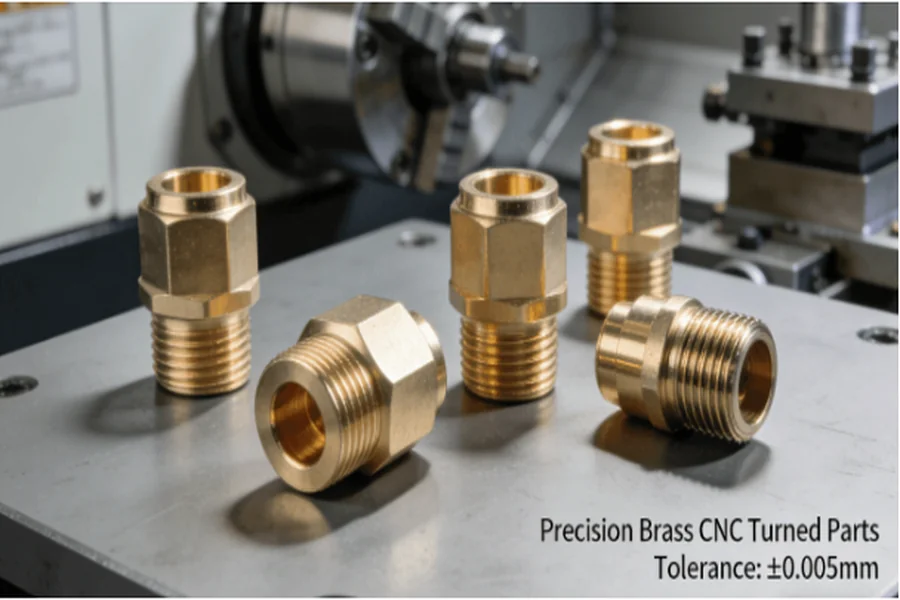
This article explores how Brass CNC Turned Parts and precision manufacturing technologies, integrated with advanced CNC machining solutions, can achieve high-precision, cost-effective production. The following sections will delve into key aspects of optimizing this workflow.
How to Choose a Reliable Brass CNC Turned Parts Supplier?
Selecting a dependable turned parts supplier is a critical decision that directly impacts project success in industrial automation. A reliable partner ensures consistent quality, on-time delivery, and cost-effectiveness for Brass CNC Turned Parts. Key selection criteria extend beyond initial pricing to encompass technical capabilities, quality certifications, and proven experience.
Key Standards for Supplier Selection
- Equipment Capability and Technical Certification
Advanced machinery is fundamental. Suppliers utilizing equipment like Japanese FANUC 5-axis CNC lathes can achieve tight tolerances up to ±0.01mm. A controlled environment, such as a constant temperature workshop, is crucial to prevent material thermal deformation. Certifications like ISO 9001, which outlines quality management system requirements, provide a framework for consistent and repeatable processes, ensuring part reliability and interchangeability.
-
Quality Management System
A robust quality management system is non-negotiable. It should include first-article inspection, in-process checks, and final validation using tools like Coordinate Measuring Machines (CMMs). Suppliers adhering to international standards can demonstrate process stability, significantly reducing the risk of defective parts entering the supply chain. Choosing a non-certified supplier might save costs initially but can lead to substantial losses due to production line stoppages, rework, and reputational damage. For instance, a medical device manufacturer faced a 30% failure rate from an uncertified vendor due to out-of-tolerance parts, highlighting the importance of a verified turned parts supplier.
Balancing Cost and Quality
Focusing solely on the lowest price is a common pitfall. While a certified supplier might have a marginally higher initial cost, the long-term savings from reduced scrap, fewer assembly issues, and reliable performance are substantial. Investing in a qualified partner like JS Precision, which offers comprehensive brass turning services, ensures value through optimized manufacturing and minimized risks.
Practical Case Study
Regions known as Precision manufacturing hubs often host suppliers with access to mature supply chains and technical expertise. A detailed guide on brass cnc turned parts can help buyers understand technical nuances. Suppliers embedded in such ecosystems can offer faster response times and more adaptable solutions, ultimately optimizing the entire manufacturing process.
How Does Brass CNC Machining Enhance Industrial Automation Efficiency?
CNC machine brass processes are pivotal in boosting efficiency within Industrial automation services. By automating the machining process, CNC technology eliminates human error, ensuring unparalleled consistency and repeatability across high-volume production runs. This is essential for components like sensor housings and connector pins, where dimensional accuracy is critical for seamless assembly and function.
The American Society of Mechanical Engineers (ASME) emphasizes the role of simulation software in modern CNC workflows. By verifying tool paths digitally before physical machining, potential collisions and errors are identified and corrected virtually, reducing setup time and material waste by up to 30%. Furthermore, Rapid prototyping services enabled by CNC machining allow for swift design iterations. Companies can test and refine parts within days, drastically accelerating product development cycles and time-to-market for new automated systems.
What are the Key Advantages of Brass Turned Parts in Precision Manufacturing?
brass precision turned components manufacturers leverage the inherent properties of brass to create components with distinct advantages for demanding applications. The material’s excellent machinability allows for high-speed production, reducing cycle times and tooling costs compared to metals like stainless steel. This makes Custom part fabrication both efficient and economical.
A primary advantage is corrosion resistance. Brass, an alloy of copper and zinc, forms a protective oxide layer, making it ideal for components exposed to moisture, chemicals, or sterilization processes in medical and marine environments. Its high electrical conductivity, approximately 65% that of pure copper, ensures reliable signal transmission in electronic connectors and sensor terminals within automated systems. Compared to traditional fabrication methods, CNC turning delivers superior surface finishes (as low as Ra 0.8), which reduces friction, improves sealing capabilities, and enhances component longevity. A case study involving a brass valve core demonstrated a 30% cost reduction and a jump in yield rate to 99.8% after switching to a professional CNC service, showcasing the tangible benefits of precision manufacturing.
How to Optimize Custom Part Manufacturing with CNC Machining Solutions?
Advanced CNC machining solutions streamline the entire custom part manufacturing process, from initial design to final delivery. Professional brass turning services integrate Design for Manufacturability (DFM) analysis at the outset, identifying potential production issues and suggesting optimizations for cost and efficiency before machining begins.
The Customized Design Process
The process starts with CAD modeling, followed by CAM programming to generate optimized tool paths. This digital workflow minimizes human error. For example, a simple DFM suggestion to change a blind hole to a through hole can significantly reduce machining difficulty and the associated scrap rate.
Production Best Practices
-
Advanced Machining Technology
Multi-axis CNC lathes enable the complete machining of complex parts in a single setup. This reduces handling time, minimizes errors from re-clamping, and improves overall dimensional accuracy. Adherence to standards like ISO 14001 for environmental management ensures that these processes are also sustainable, minimizing waste and energy consumption.
-
Sustainable Manufacturing
Optimizing cutting parameters and using efficient coolant systems not only improve part quality but also reduce the environmental footprint. Services like Precision CNC turning services often employ such sustainable practices.
Case Application
In an automotive sensor project, implementing a comprehensive CNC solution that included automated deburring reduced the delivery cycle from three weeks to two while improving part quality. This holistic approach ensures that custom manufacturing is both highly efficient and reliable.
How Do International Certifications Ensure the Quality of Turned Parts?
International certifications are a cornerstone for a reputable turned parts supplier, providing objective evidence of a commitment to quality and consistency. Standards like ISO 9001 for quality management systems require a documented process for every stage, from material sourcing to final inspection, ensuring traceability and continuous improvement.
For sectors like automotive and aerospace, specific certifications like IATF 16949 and AS9100D impose even stricter controls. These certifications directly contribute to reducing defect rates, often to levels below 0.1%. In the context of a Precision manufacturing hub, certified suppliers provide data-backed guarantees, such as statistical process control (SPC) charts and material certifications, building trust with clients. This is particularly crucial for Industrial automation services, where component failure can halt entire production lines. Certified suppliers ensure that Brass CNC Turned Parts can withstand harsh operating conditions, thereby enhancing the reliability and uptime of automated systems.
Conclusion
Brass CNC Turned Parts, supported by precision manufacturing technologies and robust CNC machining solutions, present an effective strategy for overcoming the prevalent challenges of high cost and variable quality in industrial automation. From meticulous supplier selection to adherence to international standards, each step is integral to achieving optimized production outcomes. Businesses are encouraged to engage with qualified suppliers to obtain customized Brass CNC solutions and streamline their production processes.
Author Biography
This article was composed by a precision manufacturing specialist. The expertise behind the content is supported by years of industry experience and a commitment to quality, as demonstrated by certified providers like JS Precision.
FAQs
Q1: What is the minimum order quantity for Brass CNC Turned Parts?
A: Typically, small-batch production is supported, with minimum orders as low as 100 pieces, depending on design complexity to ensure cost-effectiveness.
Q2: What is the typical delivery lead time?
A: The standard lead time is 2-4 weeks, with expedited services available to reduce it to 1 week, depending on part size and processing requirements.
Q3: Can parts with complex geometries be processed?
A: Yes, advanced CNC technology can machine intricate designs like threads and thin-walled structures while maintaining precision.
Q4: What surface finishing options are available?
A: Various options including electroplating and polishing are offered to enhance corrosion resistance and aesthetics for different applications.
Q5: How is compliance with international standards ensured?
A: Through certifications like ISO 9001 and comprehensive quality control, every batch of parts conforms to industry standards, mitigating risks.