
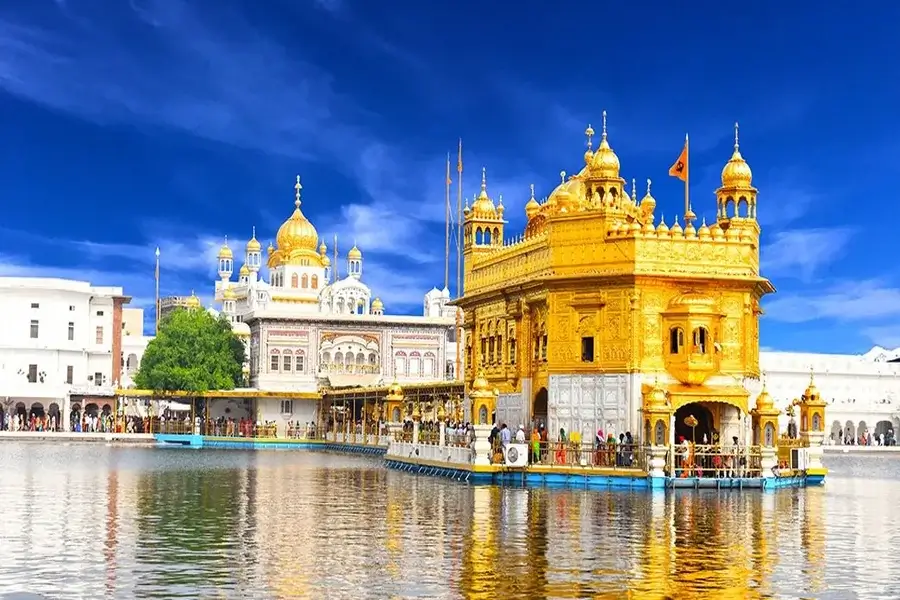
Amritsar often makes headlines for its spiritual significance, with the Golden Temple drawing visitors from across the globe. But hidden in its surrounding areas are sites that tell equally fascinating stories.
One such place is Sarai Amanat Khan, a centuries-old Mughal-era resting place with a story worth hearing. It is far removed from the city streets, giving you a chance to step back in time and see a different side of Punjab’s history.
For those who enjoy exploring beyond the usual tourist spots, this heritage site offers a refreshing change of pace.
Table of Contents
- The Story of Sarai Amanat Khan
- History, Inside the Complex, and Its Importance
- Architectural Highlights
- How to Reach and Tips for Visitors
- Exploring More of Amritsar
- Wrapping Up
The Story of Sarai Amanat Khan
Sarai Amanat Khan takes its name from Amanat Khan Shirazi, a Persian-born artist famed for his exceptional calligraphy on the walls of the Taj Mahal. After serving the Mughal court, he settled in Punjab and built this sarai as a resting place for traders, officials, and travellers.
In the Mughal period, sarais served as much more than accommodation. They were secure halts along trade routes, where ideas, cultures, and goods were exchanged.
Today, making your way to the site by hiring a car rental in Amritsar allows you to take in the countryside on the way.
History, Inside the Complex, and Its Importance
Sarai Amanat Khan was built in the 17th century, during a time when Punjab was a hub of commerce and diplomacy. It played an important role in ensuring that travellers had a safe, comfortable place to stay.
The design was purposeful — easy to navigate, secure, and suited to the climate. Inside, the layout is centred around a large courtyard, which was once surrounded by numerous guest rooms. These rooms, though weathered, still give a sense of the comfort they once provided.
The main gateway is striking, with traces of red sandstone and faded tile work. There is also a mosque within the complex, adorned with fragments of fine calligraphy and geometric patterns.
Its significance lies in its rarity. Few Mughal sarais survive in Punjab, and this one offers a direct connection to an era when hospitality was considered a reflection of cultural refinement.
The site has stood through centuries, making it a silent witness to the changes in trade, politics, and travel in the region. For travellers who like the convenience of instant booking, a cab service app keeps the arrangements simple and quick.
Architectural Highlights
The sarai’s architecture displays symmetry and proportion, hallmarks of Mughal design. The entrance arch is grand yet balanced, leading into a rectangular open space. The materials used, from red sandstone to decorative tiles, have endured harsh weather yet still retain a certain elegance.
One of the most captivating elements is the mosque’s wall art, where delicate strokes of Arabic calligraphy still catch the light. Walking here, you can sense the blend of utility and artistry that defines much of Mughal architecture.
For ease of reaching the site, booking a taxi service in Amritsar offers the convenience of direct travel without the need for multiple connections.
How to Reach and Tips for Visitors
Sarai Amanat Khan lies about 38 kilometres from Amritsar, close to the Indo-Pak border. The route takes you through the rural stretches of Punjab, which adds to the sense of stepping back in time.
If you prefer something quick and flexible, a cab service app is useful for booking instantly and managing your trip without delays.
When visiting, expect an authentic site rather than a heavily restored monument. Bring water and some light snacks, as facilities nearby are limited. You may encounter locals who are happy to share stories about the sarai’s past, adding a personal layer to the visit.
Exploring More of Amritsar
Visiting Sarai Amanat Khan pairs well with other historical and cultural experiences in and around Amritsar. Travelling in a car rental in Amritsar lets you connect these destinations smoothly in one trip.
Here are some places worth adding to your itinerary:
- Gobindgarh Fort – A 19th-century fort that now serves as a cultural museum and performance space.
- Partition Museum – A moving exhibition dedicated to the history and human stories of the Partition of India.
- Wagah Border Ceremony – The daily flag-lowering event on the Indo-Pak border, filled with energy and patriotic spirit.
- Jallianwala Bagh – A memorial park commemorating the 1919 tragedy that shaped India’s freedom struggle.
If you want flexibility without fixed schedules, hiring a taxi service in Amritsar can take you between these sites at your own pace.
Wrapping Up
Sarai Amanat Khan is an important example of Mughal-era travel and hospitality. It shows how architecture served both practical and cultural purposes in the past.
Visiting gives a direct view of a time when trade routes connected people and ideas across regions. With Savaari Car Rentals, you can include this site in your Amritsar plans and travel to it easily, along with other nearby attractions.