
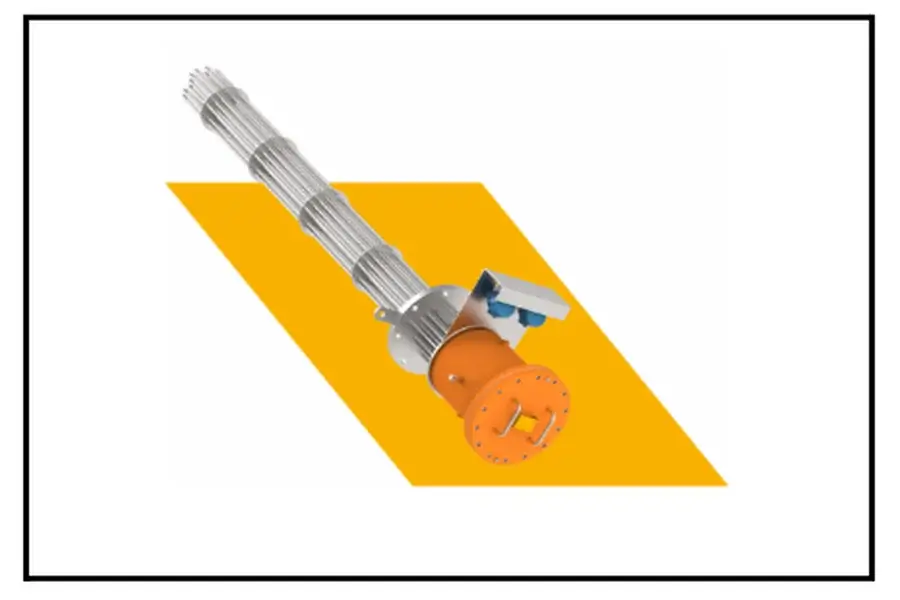
If you work in production or maintenance, you often need heat that is clean, fast, and easy to control. This brief guide outlines the basics, shows where these heaters fit, and provides a straightforward checklist for sizing and safety considerations.
What They Do—In Plain Terms
Industrial electric heater turn electricity into heat and deliver it where your process needs it—inside a tank, through a line, or across moving air. Because heat is made at the point of use, there is little loss. Control is simple, and ramp-up is quick. You also avoid fuel storage, flue gas, and burner tuning, which keeps day-to-day work easier.
Common Types And Typical Uses
- Immersion units warm liquids in tanks—water, oils, plating baths, and CIP loops.
- Circulation packages push liquid or gas through a heated chamber to achieve an even, steady output.
- Flanged or screw-plug builds mount through a tank opening, which makes swap-outs simple.
- Duct and inline air units heat air or inert gases for drying, curing, or oxidation steps.
- Cartridge, band, and strip units give tight local heat to moulds, barrels, and dies.
- Heat trace and drum wraps protect lines and portable containers from cooling or thickening.
Five Things To Confirm Before You Order
1) Medium & target temperature: Write down what you’re heating and the numbers that matter: starting temp, target temp, and the hottest film temperature you can allow at the element surface. Thick oils and delicate chemicals burn or coke if the surface gets too hot—use lower watt density for them.
2) Load & kW:Do a quick heat math: mass × specific heat × temperature rise ÷ time. Then add a bit for losses from tank walls, lids, and pipes. Size with a small safety margin so the controller doesn’t hunt or overshoot.
3) Power & controls: Match the heater to your supply—voltage, phase, and available current. For smoother control and longer element life, pick solid-state switching or an SCR controller instead of basic contactors.
4) Area & materials: Check the environment. Is it wet, corrosive, dusty, or hazardous? Choose the right sheath alloy and enclosure rating, and make sure the certifications (ATEX/IECEx or local equivalents) fit your site.
5)Service access: Plan element removal, sensor placement, and valves (for circulation units). Good access makes maintenance faster and safer.
Getting Energy Costs Under Control
Electric heat is efficient at the point of use, but the cost still depends on the kWh price and duty cycle. A few simple steps help:
- Insulate tanks, lines, and ducts.
- Stage or modulate output so you only deliver what the process needs.
- Time the preheat closer to production to avoid a long idle soak.
- Check power quality to reduce stress on elements and controls.
- Recover or recirculate warm air where practical.
Sensors And Safeguards You Should Not Skip
Good sensing makes good heat. Place a thermocouple or RTD where the process sees true temperature, not on the element surface. Use a PID controller for steady output and add an independent high-limit cut-out on every system. For liquids and gases, include flow or level interlocks to ensure power is dropped if a pump stops or a tank runs low. For traceability, log trends and keep setpoints in a short, clear start-up sheet.
Installation And Start-Up—A Short Checklist
- Verify wiring and torque lugs.
- Test insulation resistance before energizing.
- Fill tanks and purge air from lines and vessels.
- Ramp up gently. Start at low power. Check that the flow is steady and sensors are reading sensibly (no jumps, no alarms). Once the line is stable, raise power in small steps and tune the PID (or auto-tune) so the temperature settles quickly without overshoot.
- Lock in the “golden” settings. Write down the final target temperature, high-limit cut-out, ramp rate, alarm thresholds, and any valve/blower settings. Save them in the logbook and on the HMI so any shift can restore the setup to a known good state in minutes.
This is also the right time to label disconnects, valves, and sensors. Clear labels save time during audits and night-shift calls.
When Electric Heat Is The Better Choice
Choose an industrial electric heater when you need clean heat, fast response, and tight control at one or many points of use. It shines in labs, fine chemicals, food side streams, pilot lines, and plants where emission rules and safety needs make burners complex. If you have cheap waste heat or special fuel terms, do a full cost review that includes permits, upkeep, and downtime, not just the price of energy.
Working With A Capable Supplier
A good partner will size the load, choose the sheath and enclosure materials, and match sensors and controls to your duty cycle. Expect clear calculations, drawings, and a spare strategy. Tempsens brings build depth across liquids, gases, ducts, and classified areas, which shortens commissioning and improves long-term reliability. That support is often the difference between a smooth season and repeat stoppages.
Key Takeaway
Define the process, size the kW with a modest margin, pick a safe watt density, and install strong sensing and limits. With that base in place—and the right industrial electric heater for the job—you get steady quality, fewer breakdowns, and predictable energy use.