
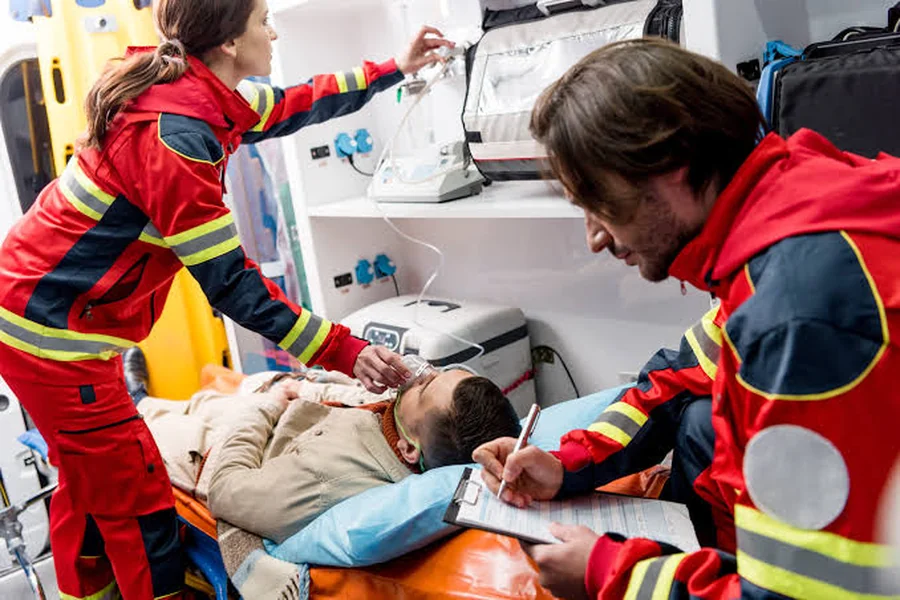
Medical emergencies often happen without notice, and cardiac emergencies are no exception. While doctors and emergency teams provide specialised treatment, the actions taken by family members, friends, or bystanders before an ambulance arrives are equally important. Understanding the basics of emergency response can help ensure that the affected person receives the best possible care during those crucial first few minutes.
According to the World Health Organisation (WHO), cardiovascular diseases remain the leading cause of death worldwide, responsible for approximately 17.9 million deaths each year. Learning to recognise cardiac emergency symptoms and knowing when to seek emergency cardiac care can make a meaningful difference in improving survival and recovery.
In this article, we’ll discuss the immediate steps to take during a cardiac emergency, common warning signs to watch for, and why timely emergency medical treatment is so important.
What is a cardiac emergency?
A cardiac emergency is any serious condition affecting the heart that requires immediate medical attention. It may include a heart attack, sudden cardiac arrest, severe irregular heart rhythms, or acute heart failure. These conditions can rapidly become life-threatening if treatment is delayed.
Although heart attacks and sudden cardiac arrest are often used interchangeably, they are not the same. A heart attack occurs when blood flow to a part of the heart is blocked, preventing the heart muscle from receiving enough oxygen. Sudden cardiac arrest, on the other hand, happens when the heart suddenly stops beating effectively because of an electrical malfunction. In some cases, a heart attack can lead to cardiac arrest.
Sudden cardiac arrest symptoms
Unlike a heart attack, sudden cardiac arrest usually occurs without much warning and requires immediate action.
Common sudden cardiac arrest symptoms include:
- Collapse
- Loss of consciousness
- No normal breathing or only gasping
- No detectable pulse
- No response when spoken to or gently shaken
If these symptoms occur, emergency medical services should be contacted immediately, and CPR should begin without delay.
What to do before the ambulance arrives
The first few minutes during a cardiac emergency are often referred to as the “golden minutes.” Staying calm and acting quickly can improve the person’s chances of survival until professional medical help arrives.
Call emergency medical services immediately
The priority is to call your local emergency number. Do not wait to see if the symptoms improve on their own. Clearly explain the person’s symptoms, location, and any known medical history if possible.
Prompt communication allows emergency responders to prepare the appropriate equipment and treatment before reaching the patient.
Help the person remain calm
If the person is conscious, encourage them to sit comfortably with their back support. Reassure them that help is on the way and discourage unnecessary movement, as physical activity increases the heart’s workload.
Loosen any tight clothing around the neck or chest to help make breathing more comfortable.
Continue monitoring the person
Stay with the person while waiting for medical help. Observe whether they remain conscious, are breathing normally, or whether their condition begins to worsen.
If they become unconscious and stop breathing normally, immediate CPR becomes necessary.
How to perform CPR during a cardiac emergency?
If a person becomes unconscious and is not breathing normally or is only gasping, they may be experiencing sudden cardiac arrest. In this situation, starting cardiopulmonary resuscitation (CPR) can help maintain blood flow to the brain and other vital organs until emergency medical professionals arrive.
If you are not formally trained in CPR, hands-only CPR is recommended for adults.
Follow these steps:
- Ensure the person is lying on a firm, flat surface.
- Kneel beside them and place the heel of one hand in the centre of the chest.
- Place your other hand on top and interlock your fingers.
- Push hard and fast at a rate of 100–120 compressions per minute, allowing the chest to rise fully after each compression.
- Continue CPR until the person begins breathing normally, or emergency responders take over.
If an Automated External Defibrillator (AED) is available nearby, ask someone to bring it immediately. Switch it on and follow the voice instructions. AEDs are designed to be used by members of the public and can significantly improve survival when used promptly.
Why prompt emergency treatment matters
An Accident & Emergency Hospital in Pune is equipped to provide rapid assessment, electrocardiograms (ECGs), blood investigations, advanced cardiac life support, and emergency stabilization for patients with suspected heart conditions.
Similarly, experienced Best Emergency Medicine Doctors in Pune work alongside cardiologists and critical care specialists to diagnose cardiac emergencies quickly and coordinate immediate treatment, improving the chances of recovery.
Conclusion
A cardiac emergency requires quick thinking, prompt action, and immediate medical attention. Recognising cardiac emergency symptoms, calling an ambulance without delay, and providing appropriate first aid while waiting for professional help can make a significant difference in protecting heart function and improving survival.
FAQs:
1.What are the first signs of a cardiac emergency?
Common cardiac emergency symptoms include chest pain or pressure, pain spreading to the arm or jaw, shortness of breath, dizziness, cold sweat, nausea, and sudden fatigue. These symptoms require immediate medical evaluation.
2.What should I do if someone collapses due to a suspected cardiac emergency?
Call emergency medical services immediately. If the person is unconscious and not breathing normally, begin hands-only CPR and continue until trained medical professionals arrive or the person starts breathing.
3.Should I wait to see if chest pain improves before calling an ambulance?
No. Chest pain should never be ignored or monitored at home for long periods. Seeking immediate medical attention allows early diagnosis and treatment, which can significantly improve outcomes and reduce the risk of serious complications.